
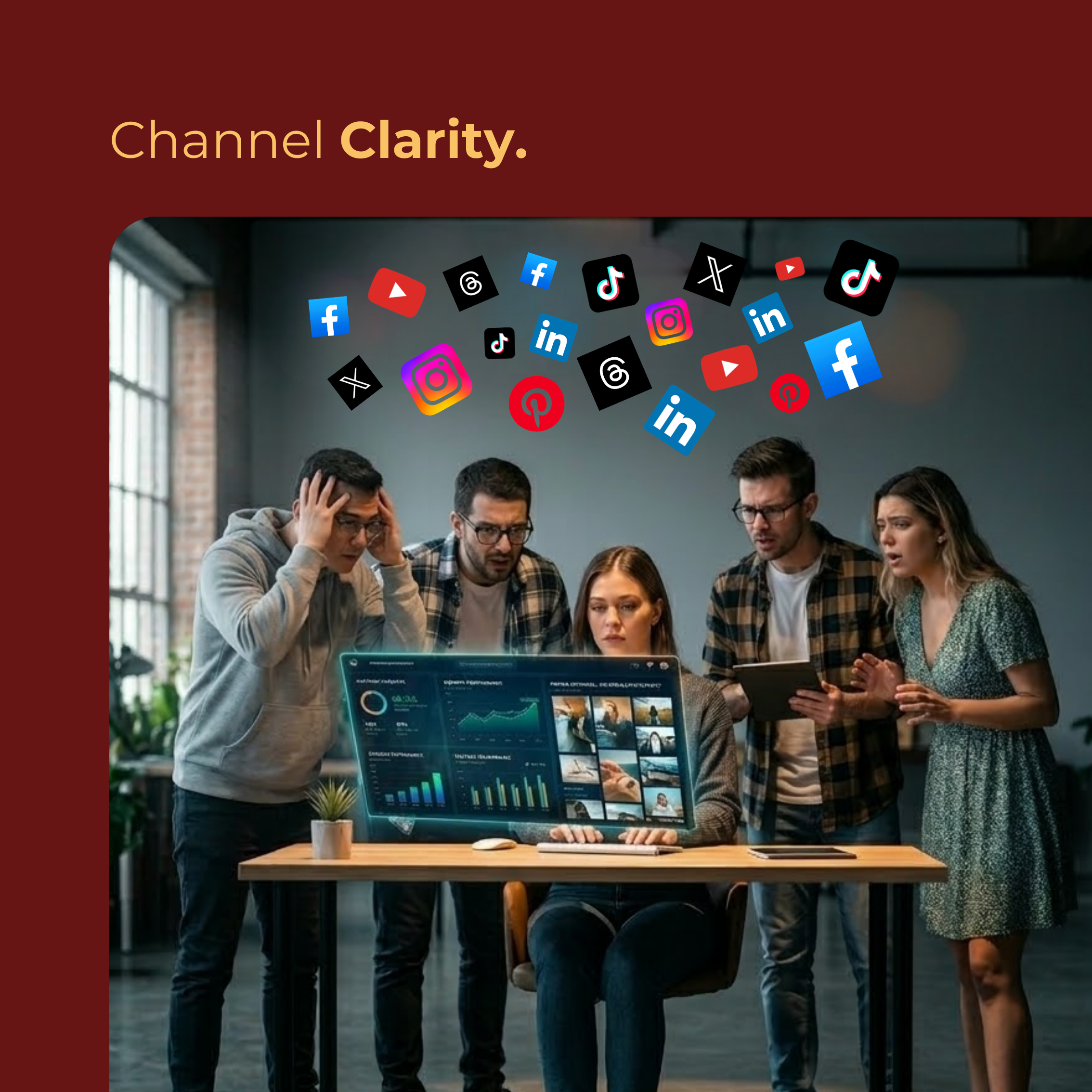
In the current marketing landscape, "FOMO" (Fear Of Missing Out) is a boardroom epidemic.
We see it every week. A client comes to us with a marketing team that is exhausted, a budget that is bleeding, and a presence that is—to be blunt—forgettable or worse, overwhelming. When we ask what their strategy is, the answer is usually: "We’re trying to be everywhere."
They are on TikTok because "that’s where the Gen Z attention is." They are on LinkedIn because "it’s professional." They’re running a newsletter, a podcast, and three different ad campaigns on Meta.
The result? They aren’t dominating any of those spaces. They are just background noise. They are getting lost in their own content.
The Dilution Trap
Marketing isn't a game of coverage; it’s a game of impact.
When you spread your resources across ten different channels, you aren't giving 100% of your brand to your audience; you're giving 10% of your effort to ten different audiences. In 2026, the algorithms and the consumers are too smart for that. They can smell "filler content" a mile away.
Channel Clarity is the discipline of saying "no" to the wrong platforms so you can say a resounding "yes" to the ones that actually drive revenue.
Finding Your "Power Channel"
At Claire, The Agency, we use a three-tier filter to help our clients move from "Spray and Pray" to "Search and Destroy."
Audience Intent vs. Audience Presence
Just because your audience is on a platform doesn't mean they want to hear from you there. Your customers might scroll TikTok for recipes at 11:00 PM, but are they in the mindset to buy your B2B SaaS solution? Probably not. We look for the "High-Intent" channel—the place where they are actively seeking solutions, not just killing time.
The Content-Competency Match
Strategy is useless without execution. If your team is brilliant at writing but awkward on camera, a YouTube-first strategy is a recipe for disaster. Channel Clarity means choosing the medium that plays to your brand’s (and teams) natural strengths.
The Path to Purchase
Every channel must have a job. Is it for awareness? Lead gen? Retention? If you can’t draw a straight line from a platform to a conversion, that platform is a hobby, not a marketing channel.
Once you have mastered one, you have earned the right to expand.
The world’s most successful brands didn’t start everywhere. They mastered one "Power Channel," built a community of advocates, and then used that momentum to capitalise other platforms.
Our advice? Stop trying to be the loudest person in ten different rooms. Start being the only person worth listening to in one.
Want to know more?
Send us an email.
We are excited to hear from you.
Claire,
Xoxo
